Everyone has their own definition of effort.
Their own threshold for what’s “a lot.” What’s “too much.” What’s worth it.
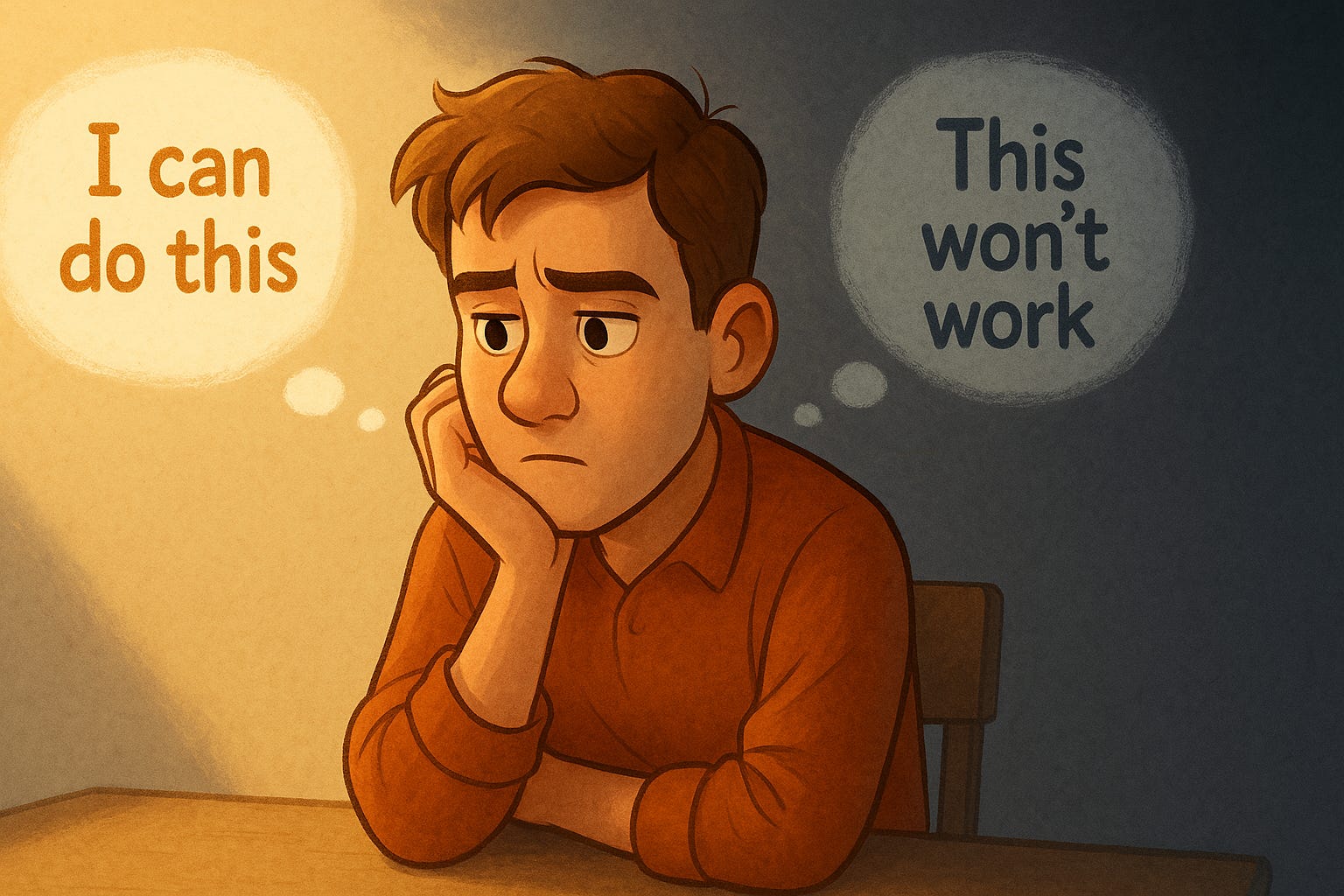
Psychology gets involved early. Beliefs shape what we think we can do, and more dangerously, what we think we can’t.
Look around
Think about how much your environment affects what you believe is possible.
If everyone around you plays small, doubts themselves, complains about how unfair things are—you absorb it. You might not even notice it happening.
This is why people get upset when the rich stay around the rich. It’s not just about money. It’s about belief systems. Confidence loops. Access to proof that success is normal.
But it works both ways.
You don’t need to be surrounded by success to believe in it.
But you doneed to decide what’s possible for you—and then protect that belief like it’s your job.

Mindset ≠ fluff
This isn’t about motivation posters.
Psychology runs the show. In fact, I’d argue it’s 80% of success. The rest? Execution and the strength of your ideas.
But here’s the twist: most people never even get to execution. Not because it’s too hard. But because they’ve already decided it’s not worth starting.
“This already exists.”
“It’s not good enough.”
“I’m not legitimate.”
Those thoughts kill more ideas than bad planning ever did.

The real flex
Execution is not as hard as people make it out to be.
What’s hard is showing upin the face of doubt. Shipping something when you feel like an imposter. Creating when no one asked you to.
That’s where the real effort lives. That’s where most people tap out.
So yeah, effort is relative. But it’s not just about energy—it’s about mindset. And how willing you are to challenge the voice that says, “don’t bother.”
Because if you can beat that voice?
You’re already ahead of most.
View on Substack